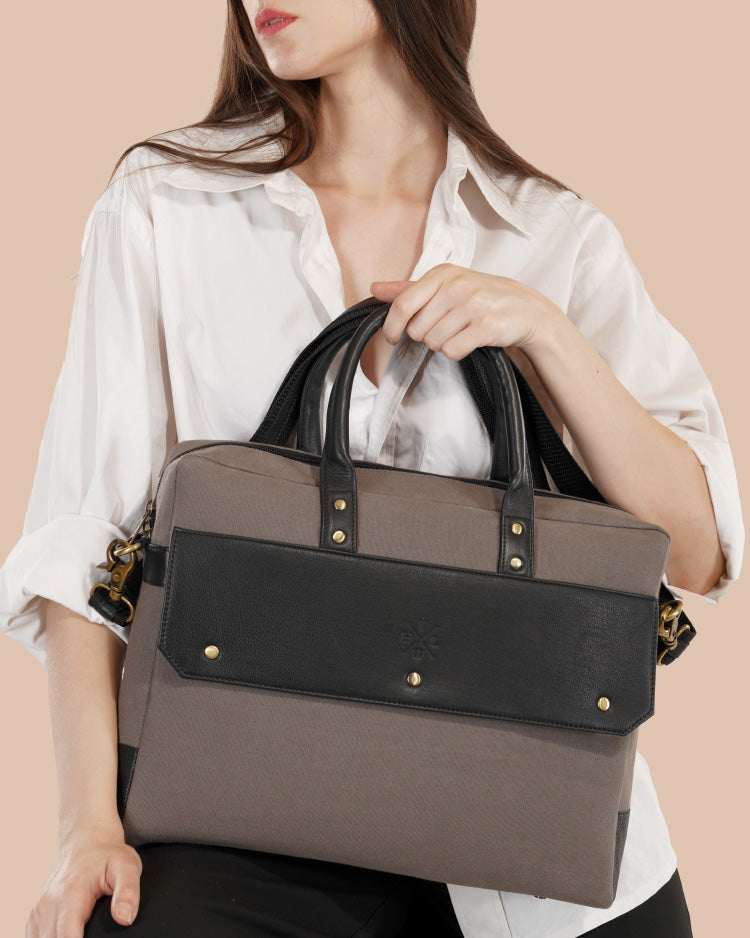
The 5-Minute Packing Rule: What Actually Belongs in a Leather Sling Bag?
A leather sling bag is small by design. That is exactly what makes it useful.
Unlike a backpack that can tempt you to carry everything “just in case,” a sling bag encourages a more intentional approach. You have limited room, so every item needs a reason to be there. The challenge is knowing what deserves that space and what should stay at home.
That is where the 5-minute packing rule comes in.
The idea is simple: before leaving, give yourself five minutes to decide what you genuinely need for the day. Instead of filling your leather sling bag until there is no room left, build your everyday carry around the things you are most likely to use.
The result is a lighter, more organized bag that works just as well for a morning commute as it does for a coffee run, casual meeting, weekend outing or short trip.
This is where a thoughtfully designed leather sling bag makes a difference. With the right combination of accessible storage, practical compartments and a comfortable carry, your everyday essentials can stay organized without weighing down your routine.

Why a Five-Minute Packing Rule Works
Most people do not carry too little. They carry too much.
An extra cable, an old receipt, three sets of keys, unused cards, random coins and items that were placed inside the bag days ago can quickly turn a compact sling into an uncomfortable storage pouch.
The five-minute approach creates a quick reset.
Before packing, ask yourself three questions:
What will I definitely use today?
What might I need if plans change?
What am I carrying only because I always carry it?
That third question is often the most revealing.
A good leather sling bag should support your routine, not become a smaller version of your entire wardrobe or office drawer.
Think of it as your personal essentials kit. Everything inside should earn its place.
1. Start With Your Phone
Your phone is usually the first item that belongs in a sling bag because it is also one of the items you reach for most frequently.
Rather than dropping it into the largest compartment with everything else, look for a dedicated pocket or an easily accessible section. Keeping your phone separate makes it quicker to retrieve and reduces the chance of scratching the screen against keys, metal accessories or other hard objects.
If you regularly use wireless earbuds, your phone and earbuds can become a simple two-item technology setup.
That is enough for many everyday situations.
There is no need to turn your sling bag into a portable electronics case unless your routine genuinely requires it.
2. Carry Only the Wallet You Actually Need
A traditional wallet can contain far more than you use on an average day.
Old receipts, expired cards, membership cards and rarely used loyalty cards can add unnecessary bulk. Before leaving, consider whether you really need to carry all of them.
For everyday use, the essentials might be:
- One or two frequently used cards
- Identification
- A small amount of cash
- Your primary payment method
If you prefer a full-size wallet, place it in a compartment where it will not interfere with other essentials.
The objective is not to own a minimalist wallet. It is to prevent unnecessary items from taking over valuable space.
3. Keys: The Smallest Item That Creates the Biggest Problem
Keys are essential, but they are also one of the easiest things to let become messy.
A large keyring with old keys, decorative pieces and multiple accessories can become surprisingly heavy inside a compact sling bag.
Take a moment to remove keys you do not use regularly.
If your bag has an interior pocket or key attachment, use it. Keeping keys in one designated place means you will not have to dig through the bag every time you arrive at your destination.
It also protects other belongings from scratches.
Your keys should be easy to find, not something you have to hunt for.
4. Sunglasses Deserve Their Own Space
If you regularly wear sunglasses, they are a natural addition to your everyday sling bag.
But sunglasses should not simply be tossed into a crowded main compartment.
Frames can bend, lenses can scratch and cases can consume more room than necessary. If your sling bag has a suitable pocket, use it for quick access. Otherwise, a slim protective case can be worthwhile.
This is one of those situations where the right accessory is useful because it protects something you already carry.
The rule is simple:
Protect what is valuable, but do not overpack the protection.
5. Keep a Small Tech Kit Instead of a Full One
Technology is where everyday carry can become excessive very quickly.
You may think you need:
- Multiple charging cables
- A power bank
- Wall adapter
- Laptop charger
- Earbuds
- USB drives
- Adapters
- Spare batteries
But do you actually need all of them every day?
Probably not.
For a typical day away from home, one charging cable and a compact power bank may be enough. If you know you will be working somewhere without convenient charging, add the appropriate adapter.
The key is to pack according to the day ahead.
A sling bag is not meant to function as a mobile electronics warehouse.
6. Add One Small Personal Care Essential
Personal-care items can be useful, particularly when you are away from home for several hours.
But this does not mean carrying a complete grooming kit.
Choose one or two things that genuinely fit your routine. That could be lip balm, hand sanitizer, a small comb, tissues or another compact personal item.
Travel-size products work especially well here.
The goal is to maintain convenience without sacrificing the compact nature of the sling bag.
If an item has not been used for weeks, ask yourself whether it still belongs in your everyday carry.
7. A Notebook Can Still Earn Its Place
Smartphones have replaced notebooks for many people, but there are situations where a small notebook remains incredibly practical.
A compact notebook can be useful for:
- Quick ideas
- Meeting notes
- To-do lists
- Measurements
- Sketches
- Phone numbers
- Reminders
Pair it with a single pen rather than an entire collection of writing tools.
This is another example of intentional packing: carry the tool you are likely to use, rather than every tool you might possibly need.
For professionals who frequently move between meetings, a slim notebook can fit naturally into a leather sling bag without making it feel overloaded.
8. Consider Your Day Before Adding Anything Else
Once your basic essentials are packed, stop.
Now think about where you are actually going.
This is the part of the five-minute rule that makes it practical.
If you are heading to the office, you may need an access card, compact notebook or additional charging accessory.
If you are traveling, a passport, travel documents and perhaps a power bank become more important.
If you are going out for the evening, you may need little more than your phone, wallet, keys and sunglasses.
The contents should change with the day.
Your sling bag does not need a permanent inventory.
What Should Stay Out of Your Sling Bag?
Knowing what not to carry is just as important.
Here are some common items that quietly turn a compact bag into a heavy one.
“Just in Case” Items
If you have carried something for months without using it, it may not be an everyday essential.
Emergency items have their place, but not every hypothetical situation deserves space in your daily bag.
Multiple Cables
One reliable charging cable is generally more useful than three cables that perform the same job.
Receipts and Paper Clutter
Receipts have a habit of multiplying.
Make it a weekly habit to empty your bag and remove old paperwork.
Oversized Accessories
Large cases, bulky wallets and unnecessarily large grooming products can consume a significant portion of your available space.
Duplicate Items
Two pens. Two charging cables. Multiple card holders.
Duplicates often appear without us noticing.
The five-minute rule gives you permission to question them.
Use the Compartments With a Purpose
A well-designed leather sling bag is not simply one large pocket with a strap attached.
A good example is a leather sling bag designed with everyday access in mind. Instead of putting everything into one large compartment, a practical layout gives frequently used items their own space while keeping the main compartment available for the things you need throughout the day.

You can assign each section a purpose:
Quick-access pocket: Phone, travel card or keys.
Main compartment: Wallet, sunglasses, notebook and other daily essentials.
Interior pocket: Smaller valuables or technology accessories.
This approach makes finding things faster.
Instead of searching through everything you own, you know approximately where each item belongs.
And once you develop that habit, putting things back becomes almost automatic.
The One-Hand Test
Here is another useful trick.
After packing your leather sling bag, imagine that you are standing in a crowded café, walking through an airport or getting out of a car.
Can you reach your most important items quickly?
If you have to empty the entire bag to find your phone or wallet, the organization needs improvement.
Your most frequently used items should generally be the easiest to access.
This is especially important for sling bags because their biggest advantage is convenience. You can keep them close to your body and move them into a comfortable position when you need access.
Good organization makes that experience even better.
Think About Weight, Not Just Space
A sling bag can technically hold many things without looking full.
That does not mean you should fill it.
Weight matters.
A few seemingly harmless additions can turn a comfortable everyday bag into something you constantly notice on your shoulder.
Start with your essentials and pay attention to how the bag feels when worn for an extended period.
If something is rarely used and noticeably adds weight, it is an easy candidate for removal.
This is especially relevant with leather bags. Genuine leather can already provide a substantial, durable construction, so there is little reason to add unnecessary weight through excessive packing.

Why Leather Works So Well for an Everyday Sling
The appeal of a leather sling bag is not only about appearance.
A well-made leather bag can combine everyday practicality with a more refined aesthetic.
Leather also has a distinctive ability to develop character over time. With regular use and appropriate care, the surface can gradually develop variations in tone and texture that make the bag feel increasingly personal.
That makes a leather sling particularly suitable for people who want something they can use repeatedly rather than replace every season.
The design should still come first.
Look for practical pockets, dependable closures, comfortable straps and strong construction. Beautiful material cannot compensate for poor everyday functionality.
The Five-Minute Packing Routine
Once you know what belongs in your bag, the five-minute routine becomes extremely simple.
Minute 1: Empty
Take everything out.
Do not organize items while they are still inside. Start with a completely empty bag.
Minute 2: Essentials
Put back your phone, wallet, keys and anything else you know you will definitely need.
Minute 3: Today's Requirements
Look at your schedule.
Add only the items required for today's specific activities.
Minute 4: Remove the Unnecessary
Check for duplicates, old receipts, unused accessories and “maybe I'll need this” items.
Remove them.
Minute 5: Organize
Place everything into its appropriate compartment.
Your bag is ready.
That is the entire system.
Make Your Sling Bag Work for the Way You Live
There is no universal list of items that every person should carry.
A photographer will have different requirements from a commuter. A traveler will need different essentials from someone spending the afternoon at a café. A professional heading into meetings may prioritize documents and writing tools, while someone going out for a casual evening may want almost nothing beyond the basics.
That is why the five-minute packing rule is more useful than a rigid packing checklist.
It adapts to you.
Your sling bag should reflect your routine, not someone else's.
A Simple Everyday Sling Bag Checklist
For a typical day, your starting point could be:
- Phone
- Wallet or card holder
- Keys
- Sunglasses
- Earbuds
- Small notebook and pen
- One charging cable
- Compact power bank, when needed
- One or two personal-care essentials
- Any item required specifically for the day's plans
You may need more. You may need less.
The important thing is that every item has a purpose.
Find the Leather Sling Bag That Fits Your Everyday Carry
Once you know what you actually need to carry, choosing the right sling bag becomes much easier. The right design should give your essentials a dedicated place without making the bag feel bulky or overbuilt.
At Leather Warehouses, our leather sling bags are designed around that balance—practical enough for everyday essentials, refined enough to complement your personal style, and built to become part of your routine rather than something you use occasionally.
Whether your daily carry starts with a phone and wallet or includes keys, sunglasses, a notebook and compact tech accessories, choose a sling bag that works with the way you actually move through your day.
Pack intentionally. Carry confidently. Choose a leather sling bag made for your everyday essentials.
Explore the Leather Warehouses sling bag collection and find the piece that earns its place in your daily carry.
Interested in placing a bulk order? Contact us on WhatsApp or email for wholesale pricing, customization options, and order assistance. We’d be happy to discuss your requirements and create the right solution for your business.
Frequently Asked Questions
1. What should I carry in a leather sling bag every day?
Keep it simple with essentials such as your phone, wallet, keys, sunglasses, earbuds, a small notebook, and any personal items you regularly use.
2. How do I avoid overpacking my sling bag?
Use the 5-minute packing rule: empty your bag, add your daily essentials, check your schedule, and remove anything you probably won't use that day.
3. Is a leather sling bag suitable for travel?
Yes. A leather sling bag can be ideal for short trips and travel days when you need quick access to essentials such as your phone, passport, wallet, tickets, and other small belongings.
4. How should I organize items inside a leather sling bag?
Keep frequently used items in easily accessible pockets and place valuables or smaller accessories in secure interior compartments. Avoid mixing keys and other sharp objects with delicate belongings.
5. Why choose a leather sling bag for everyday use?
A well-designed leather sling bag combines practical everyday storage with a timeless appearance. With the right size and compartments, it can keep your essentials organized while remaining easy to carry.