How to Care for a Leather Portfolio: A Simple Routine That Keeps It Looking Sharp
How Should You Look After a Leather Portfolio Day to Day?
Picture the leather portfolio you bought two years ago. The corners have gone dark, the zipper catches halfway, and there’s a faint ring where a coffee cup once sat. Most of that isn’t fate. It’s what happens when something that rides in your bag every day gets no attention at all, and you can undo more of it than you’d expect.
How Can You Keep a Leather Portfolio Looking Its Best?
Wipe a leather portfolio with a soft dry cloth, blot spills right away and let it air dry. Condition it with a thin coat of leather conditioner once or twice a year, more often with daily use. Keep it away from heat and sunlight, and store it somewhere breathable, not in plastic.
The steps below explain each part, and what you risk if you skip it.
Step 1: Unload the Pockets and Wipe the Leather
Every week, unload the pockets and run a soft, dry cloth over the whole outside. Pay attention to the edges and the spot where your thumb grips it, because hand oils and dust collect there fastest. Check the inside pockets while you’re at it. Old receipts and loose cards add up.
Skip this and go straight to conditioner, and you rub dust into the surface. Dust is gritty, and it wears at the finish every time the leather flexes.
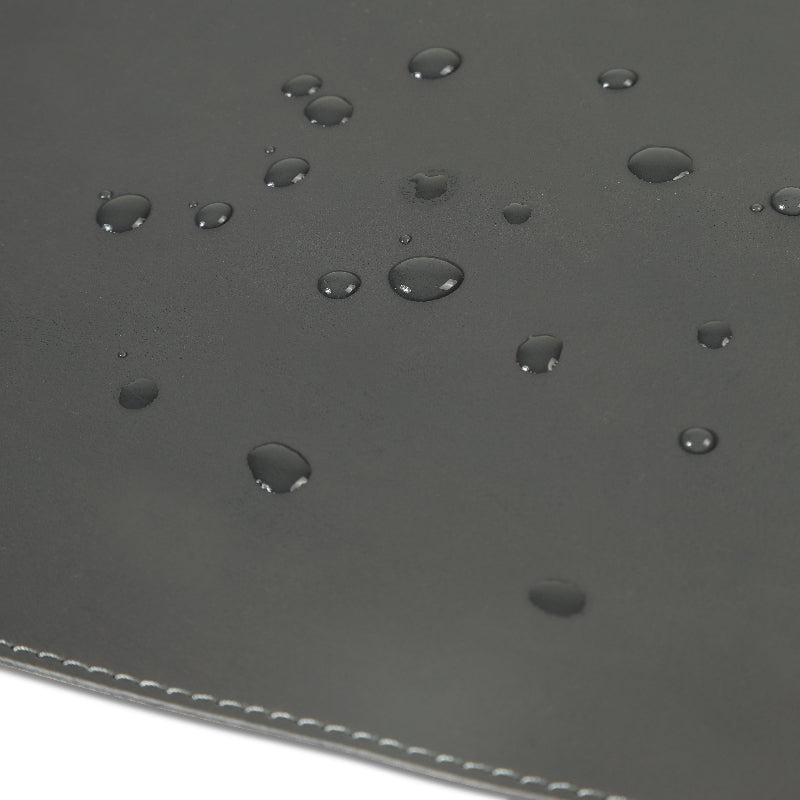
Step 2: Blot Liquid Immediately
Coffee, rain, a water bottle that leaked in your bag. Press a clean, dry cloth on the spot and lift. The advice from care guides is to blot, not rub or wipe, then let the leather air dry naturally and keep it away from direct heat, which can cause cracking.
Rubbing spreads the liquid. A hair dryer or radiator is worse, since heat stiffens leather and can crack the surface. Set it on a towel away from heat and give it time. Drying can take a day or two, and that’s fine.
Step 3: Clean Gently, Then Test Your Conditioner
Keep household cleaners away from the portfolio. They can strip the natural oils leather needs, which leads to cracking and discoloration. A dry cloth handles most dirt. For anything more, use a product made for leather.
Before you condition, find a hidden spot, such as the inside of a flap or the back of a corner. Dab a little on, wait for it to dry fully and look at the color. Conditioners often darken leather, and finding out on the front cover is not a good moment. If your portfolio is personalized, go gently around the lettered area and test next to it first.
Check the label, too. Avoid conditioners that contain petroleum or mineral oils, since prolonged use can damage the leather.
Step 4: Condition Lightly, Only When It Needs It
Put a small amount of conditioner on a soft cloth and work it in with light circular motions. Wipe off whatever the leather doesn’t absorb. Let it rest overnight before you carry it again.
How often? Sources disagree. One leather goods brand suggests nourishing leather once or twice a year. Another recommends conditioning every three months. A third notes that full-grain leather is tough enough to need conditioning less often. For a portfolio that lives in a bag every day, every few months is reasonable. If yours mostly sits on a desk or shelf, once or twice a year is enough. The leather will tell you when it needs more. Look for a dull color or a dry, stiff feel, then check our leather care guide before choosing a product.
More is not better. Over-conditioning can leave sticky spots on leather. Think of it as moisturizer, not a soak.
Step 5: Look After the Zipper, Card Slots and Lining
Pull the zipper by its tab, not the leather beside it, and don’t force it shut over a stuffed leather file folder. A sticky zipper usually has lint in its teeth. Brush it out, then rub on a touch of zipper lubricant or wax.
Card slots deserve the same thought. Leather stretches and doesn’t spring back, so a slot packed to capacity every day ends up loose. Give the slots to the cards you reach for most, and let the spares wait in a drawer. Cap your pens, too.
Hardware and linings need different treatment from the leather. Our padfolio, for example, has a felt wool lining and antique brass fixtures. Keep conditioner off the felt, brush lint away with a dry cloth and wipe the brass dry. Metal polish can stain the leather around it.
A forced zipper tears stitching, and a pen that leaks inside a light lining leaves a stain you’ll live with.
Workshop note: If you’re giving portfolios to a whole team, pass the care routine along too. Our custom folders with logo arrive ready to use, but a quick weekly wipe and a cloth bag for storage will keep a branded portfolio looking sharp long after the welcome event. We recommend this to anyone ordering in bulk.
Step 6: Pack It and Store It Properly
Keep it flat or upright in a cloth bag. Avoid plastic covers and containers, because leather needs to breath. Keep it away from radiators, sunny windowsills and parked cars. A portfolio left on a back seat in summer gets the same treatment as a hair dryer.
When you travel, don’t pack it under something heavy. One care guide warns against squeezing leather goods between two rigid objects. For a portfolio, that means a laptop on one side and a hardcover book on the other. Weight leaves permanent creases.
What Not to Use
A cleaner that works on a kitchen counter can ruin leather. Alcohol wipes and cooking oils tend to strip the finish or darken it unevenly. Petroleum jelly is also a bad idea. Soap leaves marks, and a soaking leaves the leather stiff once it dries. If you’re not sure a product is safe, test it somewhere hidden or skip it. A dry cloth costs nothing and never makes things worse.
What About Scuffs and Scratches?
Light scuffs often fade if you rub them gently with a clean fingertip, because the warmth and natural oils from your skin help the leather settle. Deeper marks may respond to a thin coat of conditioner. Cuts and gouges need a professional.
Full-grain leather also develops a patina over time, and small marks are part of that. A portfolio that looks lived-in after two years isn’t damaged. It’s aging, and plenty of people prefer it to the day-one look.
A Simple Schedule
|
Task |
How often |
|
Wipe with a dry cloth |
Weekly |
|
Check zipper and stitching |
Monthly |
|
Condition thinly |
Once or twice a year (light use), every few months (daily carry) |
|
Blot spills |
Immediately |
|
Clear out cards and receipts |
Monthly |
Our leather care guide has more detail on cleaning products. If you’re still choosing a style, read our guide to leather portfolio styles for business professionals. Want something with your name on it? Browse the personalized leather portfolio range, or look at the zip-around portfolio in black.
Leather Portfolio Care FAQs
Q1. Can I clean a leather portfolio with water?
Only a lightly dampened cloth, and only on dirt, not as a soak. Too much water can stain or stiffen leather. Blot any liquid and let it air dry away from heat.
Q2. How often should I condition a leather portfolio?
Once or twice a year for light use, and every few months if it travels in a bag daily. Full-grain leather needs it less often. Test a hidden spot first.
Q3. Can I fix a scratch on a leather portfolio?
Light scuffs often fade with gentle rubbing or a thin coat of conditioner. Deep cuts or gouges need a professional.
Q4. Can I use olive oil or Vaseline on a leather portfolio?
No. Cooking oils can darken the leather unevenly, and petroleum-based products can damage it over time. Use a conditioner made for leather.
Q5. Is it okay to keep a leather portfolio in a plastic bag?
No. Plastic traps moisture and stops the leather from breathing. Use a cloth bag instead.